Parfum vs eau de parfum vs eau de toilette vs cologne: full strength guide
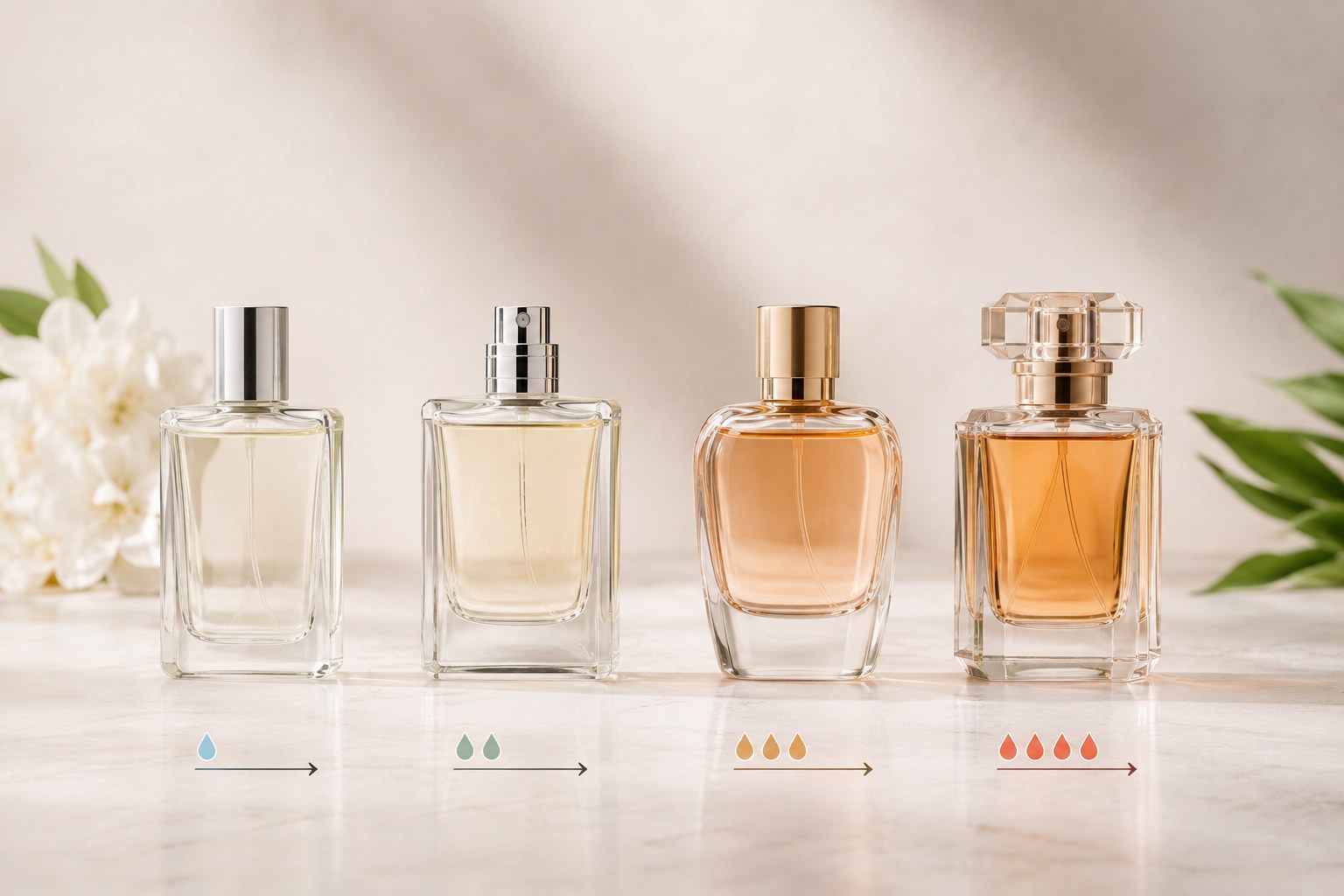
The words on a fragrance box aren't marketing fluff — they tell you the actual concentration of perfume oil in the bottle, which affects strength, longevity, and price. Here's what each one really means, from strongest to lightest.
Parfum / Extrait de Parfum (20–40% concentration)
This is the most concentrated form of fragrance you can buy. It's oil-heavy, alcohol-light, which means it projects less into the air but sits closer to the skin and lasts the longest — often 8+ hours. It's also the most expensive per bottle, though a little goes further since you need less.
Eau de Parfum, EDP (15–20% concentration)
The most common concentration for modern releases, and usually the best all-around value. Strong enough to last most of a workday, with enough projection to be noticeable without being overwhelming. If you only own one concentration of a scent, this is usually the right one.
Eau de Toilette, EDT (5–15% concentration)
Lighter and fresher-feeling than EDP, with less staying power — expect 3–5 hours before it fades significantly. EDTs are a good match for daytime wear, warm climates, or scents you want to reapply through the day rather than commit to all at once.
Eau de Cologne, EDC (2–4% concentration)
Very light, very short-lived — often under two hours. Traditionally citrus-forward and designed to be splashed on generously and reapplied. Despite the name, "cologne" doesn't mean "men's fragrance" — it refers specifically to this lighter concentration, regardless of who's wearing it.
Splash / Eau Fraîche (1–3% concentration)
The lightest tier, often mostly water with a small percentage of fragrance oil. Barely-there and gone within an hour or two — more of a refreshing gesture than a lasting scent.
Don't assume a higher concentration is always "better." If a scent is bold, an EDT might genuinely wear better on you than the more intense parfum version of the same fragrance.
Which one should you actually buy?
If you're buying your first bottle of a scent you love, go EDP — it's the most balanced option for longevity and price. If you already own the EDP and want something lighter for hot days or the office, an EDT of the same fragrance is a smart add rather than a downgrade. For more on getting the most out of whatever concentration you choose, see our guide on how to make your fragrance last all day.